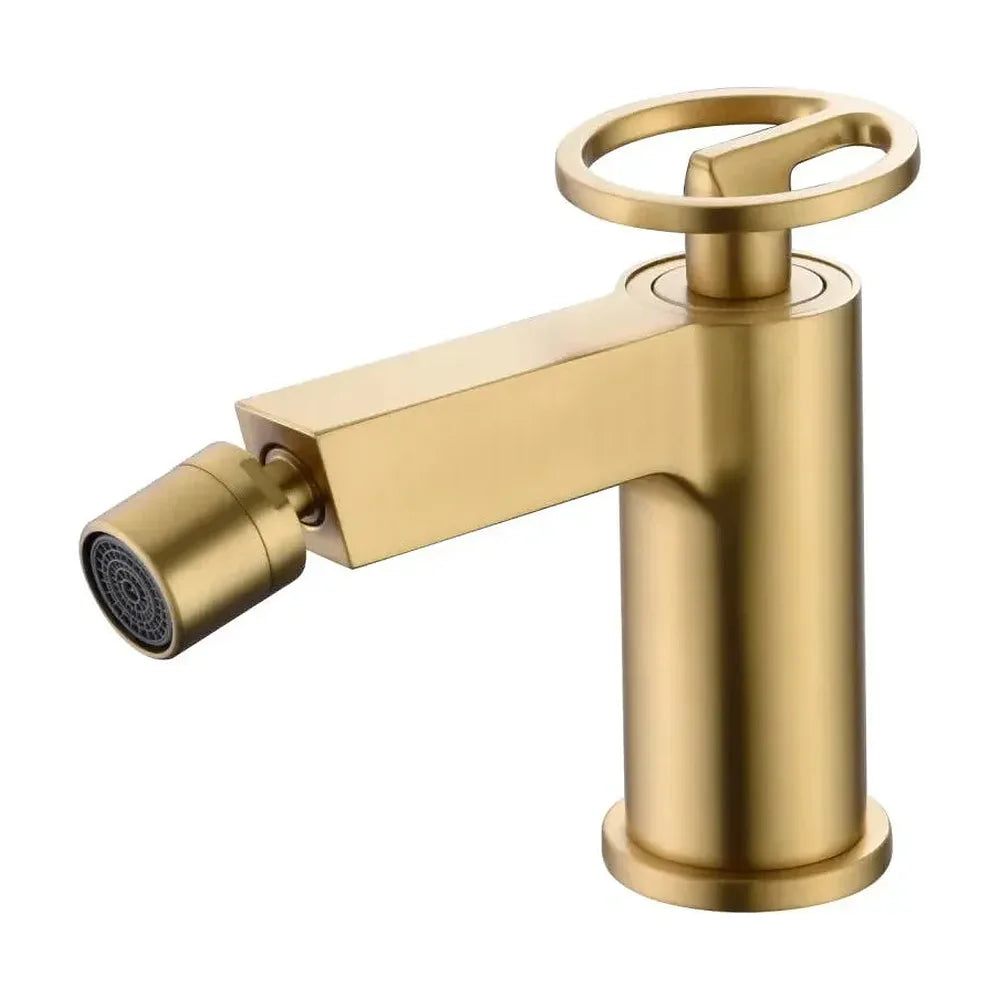


A modern bathroom is a space with clean, uncluttered lines that combines compact sanitary ware—often rimless or wall-hung—designer faucets in finishes such as matte black, brushed gold, or chrome, moisture-resistant materials, and LED lighting, prioritizing functionality, a sense of spaciousness, and ease of cleaning.
Designing a modern bathroom is not about filling it with novelties, but rather choosing a few things well and making them work together. In this guide, we review what distinguishes a contemporary bathroom today, which materials and finishes are trending, how to combine colors without taking excessive risks, and which sanitary ware fits this style. All product examples are taken from actual pages in the Merkimarket bathroom catalog.
Key facts about the modern bathroom
- Aesthetics: straight or softly curved lines, clear surfaces, and fewer visible elements.
- Sanitary ware: compact toilets with rimless technology and wall-hung or back-to-wall models.
- Faucets: ceramic cartridge single-lever mixers in chrome, matte black, brushed gold, or black gun metal.
- Materials: porcelain, brass, and stainless steel in faucets, resin in shower trays, and easy-to-clean surfaces.
- Color: neutral bases (white, gray, greige) with one or two coordinated accents.
- Lighting: LED, backlit mirrors, and adjustable color temperature.
- Warranty: legal minimum of three years for consumers in Spain on sanitary ware and faucets.
With this foundation, you already have the map; below, we develop each point so you can make decisions with criteria.
What defines a modern bathroom today
A contemporary bathroom is recognized, above all, by what it lacks: ornaments, moldings, and bulky pieces. In their place, a sense of order prevails. The lines are clean, surfaces are cleared, and every element fulfills a clear function. That visual restraint is not minimalism for the sake of fashion, but a practical decision: the less cluttered a bathroom is, the more spacious it appears and the easier it is to keep clean.
Two ideas summarize the style. The first is continuity: large-format flooring and wall tiles, with fewer joints, which unify the space and convey calm. The second is integration: faucets, drains, furniture, and even the cistern tend to be hidden or coordinated in the same language, so that nothing clashes. The result is a bathroom that is read at a glance, without visual noise.
Materials that define the current style
In a bathroom, humidity is constant, so material is not just aesthetics: it determines durability. These are the stars of the modern bathroom and why they work:
Sanitary porcelain. It remains the king for toilets and washbasins due to its hygiene and resistance. Current models incorporate treatments that facilitate cleaning and compact designs that gain centimeters in tight bathrooms.
Brass in faucets. It is the reference material for its resistance to corrosion and its weight. It is wise to be wary of faucets that are too light: they often reveal zamak interiors in pieces that should be solid brass.
Stainless steel. Common in shower columns and sets, it withstands continuous exposure to water better. In the most demanding ranges, S.316 steel is used, which is even more resistant to corrosion.
Resin. It dominates modern shower trays for its warm touch, textured finishes, and the possibility of cutting them to size to achieve a flush-mounted floor, one of the most sought-after features of the current bathroom.
Finishes and faucets: the detail that changes everything
If there is one element capable of modernizing a bathroom with little renovation work, it is the faucet. Replacing outdated taps with designer single-lever mixers transforms the perception of the whole. The key lies in the finish, which today goes far beyond the traditional chrome.

Each finish conveys a different idea and fits better with certain environments. This table summarizes those most seen in modern bathrooms:
| Finish | Character | Combines with | Maintenance |
|---|---|---|---|
| Chrome | Neutral and timeless | Any style | Very easy; limescale drops are less visible |
| Matte black | Bold and contemporary | White, wood, gray | Requires drying to prevent water spots |
| Brushed gold | Warm and elegant | White, green, earthy tones | Medium; the brushing hides fingerprints |
| Black gun metal | Sophisticated, graphite gray | Gray, off-white, marble | Medium; resistant PVD finish |
One tip that makes a difference: choose the same finish for the faucet, the drain valve, and the exposed siphon. That coordination detail is what gives a sense of a careful set and separates a "well-made" bathroom from an improvised one. At Merkimarket, you can see that philosophy in pieces like the Monza washbasin faucet in brushed gold, with its matching click-clack valve available in the same tone.
Color combinations that work
The most common mistake when setting up a modern bathroom is adding too many protagonists. The rule that almost never fails is to start from a neutral base and add one or, at most, two coordinated accents. These combinations are safe bets:
| Base | Accent | Result |
|---|---|---|
| White | Matte black | Clean and very current contrast |
| Light gray / greige | Brushed gold | Warm and sophisticated |
| Off-white | Natural wood | Nordic and cozy |
| Graphite gray | Black gun metal | Elegant and enveloping |
Note that the color of the sanitary ware also counts. Compared to classic bright white, matte finishes are increasingly seen, which reduce reflections and integrate better into current environments, such as the matte white wall-mounted toilet from Roca's Ona range.

Modern sanitary ware: rimless, wall-hung, and compact
The toilet is the element that has evolved the most. Three trends define modern sanitary ware:
Rimless technology. It eliminates the interior rim where dirt used to accumulate, which improves hygiene and makes cleaning much easier. It is now almost a standard in current models, like the Roca The Gap Square rimless.
Compact design. Reduced-depth toilets—around 36-37 cm compared to the traditional 40 cm—free up space without sacrificing comfort, which is key in small bathrooms.
Wall-hung or back-to-wall format. The wall-hung toilet, with the cistern recessed in a frame inside the wall, leaves the floor clear and provides that light air so associated with the modern bathroom. The back-to-wall version achieves a similar effect without as much renovation work.

Lighting and mirrors: the layer that brings it to life
Lighting is what separates a correct bathroom from one that impresses. In a modern bathroom, you work in layers: general light on the ceiling and task light next to the mirror, which is where it is truly appreciated. Mirrors with integrated LED light solve both things and, furthermore, many incorporate anti-fog features and adjustable color temperature to transition from a warm and relaxing light to a neutral and accurate one for shaving or applying makeup.
Two practical notes. In areas near the shower, check the IP protection rating of the light source. And for the mirror, a light around 4000 K offers a good balance: neither too cold nor so warm that it distorts skin tones.
How to design your modern bathroom in 6 steps
- Define the faucet finish first. It is the decision that dictates everything else. Chrome if you are looking for neutral; matte black or brushed gold if you want character.
- Choose a neutral base. White, gray, or greige in wall tiles and sanitary ware will give you margin to get the accents right.
- Coordinate sanitary ware. Go for rimless and, if space and budget allow, the wall-hung or compact format.
- Think about the shower floor. A resin tray flush with the flooring is one of the most modern and accessible gestures.
- Design light in layers. Combine general lighting with an LED mirror with adjustable temperature.
- Close the deal with matching accessories. Valve, exposed siphon, and accessories in the same finish complete the set. It is the step that most people forget and the one that is most noticeable.
If you are going to undertake a complete renovation, our guide on how to renovate the bathroom in phases will help you. And if yours is a small space, don't miss these ideas for small bathrooms. To refine the aesthetic, this guide to combining finishes complements very well what you have seen here.
Frequently asked questions about modern bathrooms
What characterizes a modern bathroom?
It is recognized by its clean lines, cleared surfaces, and the integration of elements. Rimless or wall-hung sanitary ware, designer faucets in finishes like matte black or brushed gold, moisture-resistant materials, and layered LED lighting predominate.
What colors are trendy in modern bathrooms?
Neutral bases (white, gray, and greige) combined with one or two coordinated accents. The safest bets are white with matte black, gray with brushed gold, and off-white with natural wood. Matte finish sanitary ware is also gaining ground against bright white.
Is a wall-hung or floor-mounted toilet better in a modern bathroom?
The wall-hung toilet leaves the floor clear, provides lightness, and facilitates cleaning, but it requires installing a frame with a recessed cistern, which implies more work. The back-to-wall toilet achieves a similar visual effect with a simpler installation.
How much does it cost to set up a modern bathroom?
It depends on the scope: renewing just the faucet, mirror, and accessories is affordable, while a full renovation changing sanitary ware, shower tray, and wall tiles increases significantly. It is best to start from a budget by line item; prices and availability are consulted on each page.
Article written by the Merkimarket editorial team. Product examples (materials, finishes, and technologies) taken from the pages of the Merkimarket bathroom catalog. Prices and availability may vary; check each page for current information in Spain.