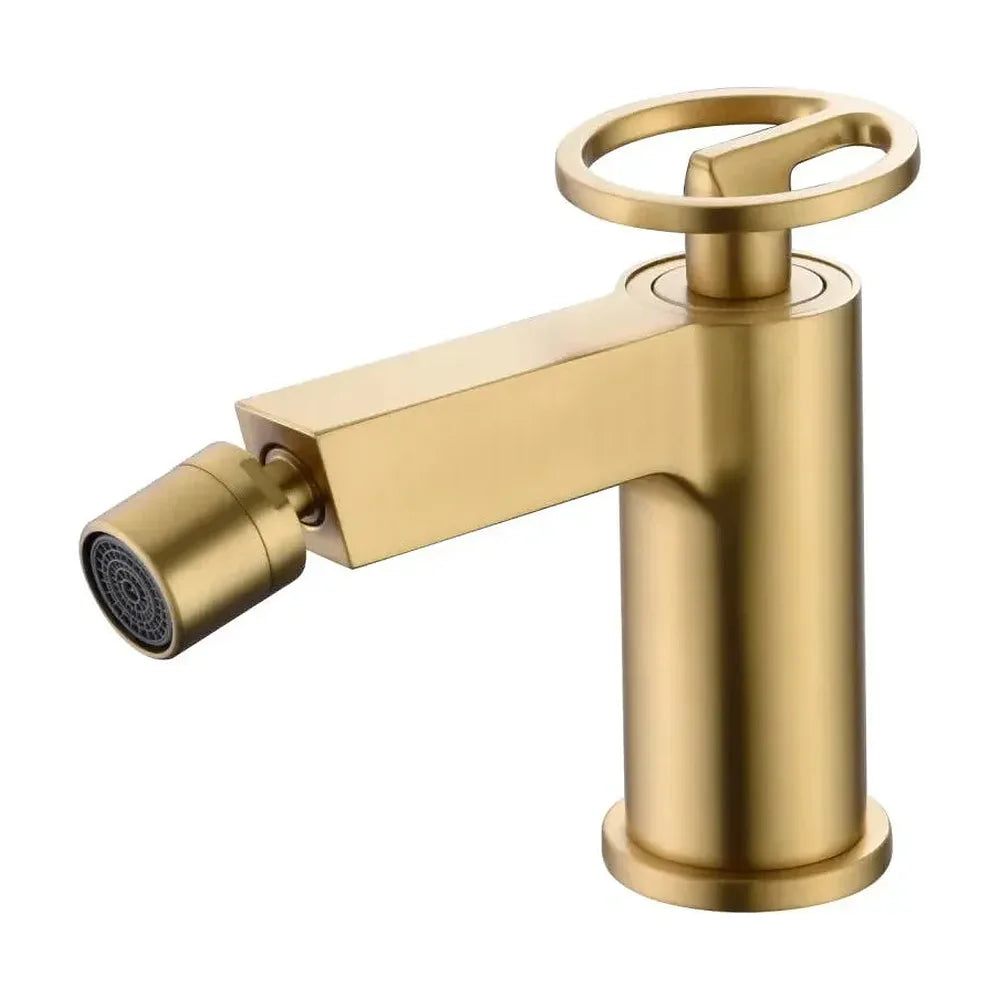


A pull-out kitchen faucet is a single-lever mixer whose spout incorporates a nozzle with a flexible hose that can be pulled out and directed by hand. It allows for filling pots outside the sink, rinsing the entire basin and dishes comfortably, and, in most models, toggling between an aerated stream and a spray (dual jet) by pressing a button.
The pull-out faucet has become the standard for the modern kitchen for a very practical reason: the nozzle extends several centimeters from the spout and can be aimed by hand, so you stop struggling with tall pots and the corners of the sink that you couldn't reach before. In this guide, we will tell you how it works, what its real advantages (and disadvantages) are, what to look for when buying one, and how to maintain it so that the hose and cartridge last for years. The technical data is taken from the actual product sheets in the kitchen section of Merkimarket.
Key facts about pull-out faucets
- What it is: A single-lever faucet with a pull-out nozzle on a flexible hose.
- Star feature: Dual jet diffuser, which alternates between an aerated stream and a shower or spray.
- Common materials: Brass body and, in high-resistance models, stainless steel (including S.316 steel).
- Cartridge: Ceramic, the standard that regulates flow and temperature without dripping for thousands of uses.
- Finishes: Chrome, brushed gold, brushed rose gold, matte black, black gun metal (PVD treatment), and matte white.
- Extras: Versions with a motion sensor and digital panel to turn on the water without touching the faucet.
- Warranty: The legal minimum of three years for consumers in Spain, plus the seller's commercial warranty.
With this summary, you have the essentials; below we expand on each point so you can buy with confidence.
What is a pull-out faucet and how does it work
At first glance, it looks like a conventional high-spout mixer, but the end of the spout hides a nozzle that detaches when you pull it. That nozzle is attached to a flexible hose that runs through the inside of the faucet body and down under the sink. When you release the nozzle, a counterweight (and, in newer models, a small magnet in the spout housing) retracts it and secures it back in place so it doesn't hang down.
The result is that you can take the water where you need it instead of depending on the fixed point where the stream falls. That freedom of movement, combined with the high, rotating spout, is what differentiates a pull-out faucet from a traditional one and explains why it has become the standard in today's kitchen.
Dual jet, spray, and sensor: the features that make the difference
Not all pull-out faucets are the same. The feature you will use the most is the dual jet diffuser: with a button on the nozzle itself, you can switch between an aerated stream, soft and comfortable for daily use, and a shower or spray jet, wider and more powerful for rinsing dishes or washing debris out of the basin. It is the difference between filling a glass without splashing and cleaning an oven tray in seconds.
Above the dual jet are the models with motion sensors and digital panels, which allow you to turn the water on and off by bringing your hand close, something very useful when you are cooking with dirty hands or hands covered in dough, and which helps to avoid wasting water. Whatever model you look at, ensure the spout is swivel (ideally 360°) so you can work with two basins or move it aside when draining.

Real advantages (and a few disadvantages)
The advantages of a pull-out faucet are tangible from the first day. You can fill pots and buckets outside the sink, rinse the entire basin without leaving residue in the corners, clean bulky dishes with the spray jet, and even water plants on the windowsill without carrying water. The high spout leaves plenty of room to wash a large pot, and the dual jet makes quick work of tasks that were once awkward.
It is also worth knowing the other side of it. The hose is a moving part subject to wear: over the years it may need replacing, although it is a simple and inexpensive spare part. In addition, the faucet requires free space under the countertop so that the hose and counterweight can move without rubbing against pipes or the cabinet. And, within the same series, a pull-out model usually costs slightly more than a fixed single-lever faucet. None of this takes away from it: these are nuances to keep in mind before installing.
Materials, cartridge, and finishes that really matter
What separates a faucet that lasts from one that fails after a year is not the photo, but what you can't see. These are the three points worth checking:
Body. Most pull-out faucets are made of brass, the benchmark material for its resistance to corrosion and its weight. Some high-end models use stainless steel, including S.316 steel, which is especially suitable for continuous exposure to moisture and limescale. Be wary of a suspiciously light faucet: this often indicates zamak interiors in parts that should be made of brass.
Cartridge. This is the heart of the single-lever mixer. Quality models feature a ceramic cartridge, which regulates flow and temperature with a smooth feel and no leaks over thousands of uses. It is a replaceable part, so a good cartridge extends the life of the faucet by years.
Finish. In addition to classic chrome, today you can find brushed gold, brushed rose gold, matte black, black gun metal, and matte white. In colored finishes, PVD treatment is the most resistant to daily cleaning without losing tone. A tip: choose the faucet finish thinking about how it will combine with the sink and the kitchen handles.

IMEX pull-out models: series comparison
In the Merkimarket catalog, IMEX pull-out kitchen faucets are organized by series, each with its own character and range of finishes. Here is a comparison of the main ones to help you orient yourself:
| Series | Function | Material | Common finishes |
|---|---|---|---|
| Bonn | Pull-out with dual jet | Brass | Chrome, brushed gold, rose gold, matte black, black gun metal |
| Niza | Pull-out with dual jet | Brass | Chrome, brushed gold, rose gold, matte black, black gun metal |
| Berna | Pull-out with dual jet | Brass | Chrome, brushed gold, matte black |
| Malta | High-spout pull-out | Brass and S.316 stainless steel | Chrome, steel, brushed gold, rose gold, matte white, black gun metal |
| Turín | Pull-out with sensor and digital panel | Brass | Chrome, matte black |

As you can see, Bonn, Niza, and Berna share the dual-jet base and differ mainly in design and color range; Malta is the most resistant choice thanks to S.316 steel; and Turín adds the convenience of the sensor. If you want the details model by model, you have the complete comparison of IMEX kitchen faucets on the blog.
Step-by-step maintenance for years of use
A well-maintained pull-out faucet is noticeable in the feel of the stream and the lack of leaks. Dedicate a few minutes every few weeks to this routine:
- Descale the nozzle. Limescale clogs the aerator and distorts the stream. Rub the nozzle with a cloth and white vinegar diluted in water, or soak it for a few minutes; never use metal scouring pads or abrasive products on PVD finishes.
- Check the hose. Once or twice a year, check under the sink to ensure the hose slides smoothly, the counterweight doesn't rub against the pipes, and there is no moisture at the connections.
- Clean or change the aerator. If the flow rate drops or it splashes, unscrew the aerator from the nozzle, remove the limescale, and reassemble it; if it is badly damaged, replace it.
- Take care of the cartridge. A single-lever mixer that drips when closed or is difficult to move usually needs a new ceramic cartridge. It is an affordable repair that returns the faucet to its original state.
- Protect the finish. Dry the faucet after use and clean it only with soap and water. This maintains the shine of the chrome or the tone of the gold and matte black without limescale stains.
How to choose your pull-out faucet in 4 steps
Summarizing all of the above into a practical decision:
- Define the finish. This is what dictates the overall look: chrome for an infallible neutral, brushed gold or black gun metal if you are looking for character. Think about coordinating it with the sink.
- Choose the function. For almost all kitchens, the dual jet is sufficient and offers the best price-to-utility ratio; the sensor is worthwhile if you cook a lot and want to turn it on without touching the handle.
- Check the space. Measure the clearance to the shelf or window and make sure there is room under the countertop for the hose.
- Look at the material. Brass for general use; S.316 steel if your water is very hard or you want maximum resistance to corrosion.
Ready to see the product? Explore the kitchen faucets at Merkimarket or go directly to two popular references to get an idea of quality and finish: the Bonn pull-out faucet in brushed gold and the Turín faucet with sensor. And if you are still deciding on the type of faucet, our guide on types of kitchen faucets, spouts, and functions will help you.
Frequently asked questions about pull-out kitchen faucets
Is a pull-out kitchen faucet worth it?
For most kitchens, yes. The pull-out nozzle makes it easy to fill pots, rinse the entire basin, and clean large dishes—tasks that are uncomfortable with a fixed faucet. The price premium over a normal single-lever faucet is small and pays off in daily convenience.
What is the dual jet?
It is the function that allows you to switch, with a button on the nozzle, between an aerated stream for daily use and a shower or spray jet, wider and more powerful, designed to rinse dishes and clear debris from the sink.
Can the hose of a pull-out faucet be changed?
Yes. The hose is a replaceable part and one of the most common spares over the years. The ceramic cartridge and the aerator are also replaceable, which greatly extends the life of the faucet without replacing the whole unit.
What material is a pull-out kitchen faucet best made of?
Brass is the standard for its resistance and weight. If your water is very hard or you want maximum durability against corrosion, models in S.316 stainless steel are the most robust option.
Article written by the Merkimarket editorial team. Technical data (series, materials, cartridges, and finishes) taken from the Merkimarket kitchen catalog. Price ranges and availability may vary; check each product sheet for current information in Spain.